
What Generation?
“‘Truly I tell you, this generation will certainly not pass away until all these things have happened. Heaven and earth will pass away, but my words will never pass away.’”
Today’s Text: Matthew 24:29-35 (Living Life Daily Devotional)
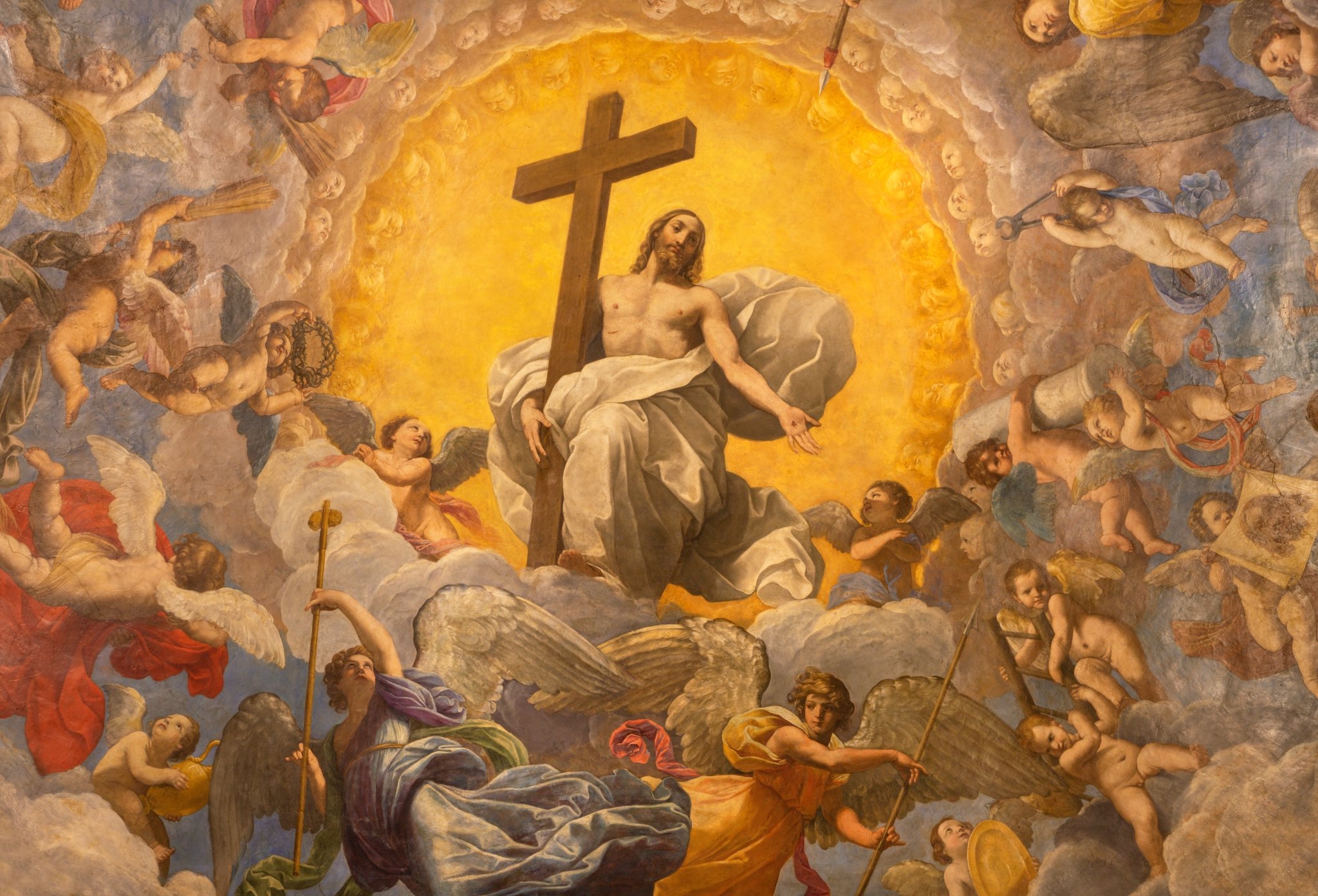
Are we more moved by the beauty or the history of the Sistine Chapel than we are by the message that its ceiling art communicates? If we are more moved by the beauty or the history of the art, then its an emotional response that probably will not amount to anything beyond that. But if we are more moved by the message (which is really what the artist was trying to do), then that is a spiritual response that should lead to fruit.
Most of us are scared to death of obeying Jesus’s command, “Seek first His kingdom and His righteousness” (Matthew 6:33). It would mean that we would have to conform our priorities to align with His priorities. However, we would be more compelled to obey that command if we really thought in our gut that Jesus is returning really soon.
There is a lot of speculation about what Jesus meant by “this generation.” If “this generation” meant the generation of the people that Jesus was talking to, we have to interpret His prophecy in that light.
And in that light, some think that “the Son of Man coming on the clouds of heaven, with power and great glory” (verse 30) is a metaphor for national catastrophe—in particular, utter destruction at the hands of an invading army. And indeed, in that “generation,” about forty years later in 70AD, Jerusalem and the temple were destroyed by the Roman empire because of a Jewish rebellion. The temple has never been rebuilt since.
Others think that “this generation” refers to what is called the “age of the church” or the “age of the Spirit.” It is that time between Jesus’s resurrection and Jesus’s return, where “this gospel of the kingdom will be preached in the whole world as a testimony to all nations” (verse 14) through the church, empowered by the Holy Spirit. That is the bottom line application of the whole New Testament.
And of course, that makes more sense in light of the fact that Jesus has not returned, yet. And even though Jesus was notorious for answering questions in an ambiguous way, the disciples were asking about the sign of Jesus’s “coming and the end of the age” (verse 3).
The early Christians, including all the apostles, probably understood Jesus to have meant that He was going to return to usher in the end of days in their lifetime. And that makes sense in light of their zeal and willingness to be martyred, as well as the fact that many witnessed the resurrected Christ in person.
Not everyone is called to be a martyr, although it is clear that martyrs have a special place in the heart of God (Revelation 6:9-11). Even so, whatever Jesus meant by “this generation,” every generation of Christians ought to understand it in the way that the first generation of Christians did. That is how we are supposed to understand Jesus’s statement.
It is not natural for us to understand Jesus’s statement in the way He intended it. We are more easily consumed by “the worries of this life, the deceitfulness of wealth and the desires for other things” (Mark 4:19). That is the life we live, because that is the only life that we know. And so we go for a long spell (maybe a lifetime) of being “unfruitful” (Mark 4:19). Is that the word the Lord would used to describe me? Please, Lord, may it not be so.
Father, You alone know all things. You alone hold the world in Your hands. I wish You would tell us when our Lord is coming back, but You have Your reasons for not telling us, so who am I to question. I confess that I do not consider the Lord’s return every moment that I live. I know I should. Forgive me. Change my perspective and change my heart to order my life around the return of my Lord. And may it be for this Canvas community, too. Give us Your perspective and heart so that we would stop caring only for our own worries, wealth, and desires, and start caring about the eternal salvation of others. In Jesus’s name. Amen.