
Religion
“‘Therefore I tell you that the kingdom of God will be taken away from you and given to a people who will produce its fruit. Anyone who falls on this stone will be broken to pieces; anyone on whom it falls will be crushed.’
When the chief priests and the Pharisees heard Jesus’ parables, they knew he was talking about them. They looked for a way to arrest him, but they were afraid of the crowd because the people held that he was a prophet.”
Today’s Text: Matthew 21:33-46 (Living Life Daily Devotional)
It’s not that the chief priests and Pharisees could not understand Jesus’s parables. They understood quite well that Jesus was pointing out the shortcomings of their religion. And for that, they wanted to kill Him, in fulfillment of the very parable that He spoke to them.
So what was the shortcoming of the religion of the Jewish authorities?
It’s not that they believed in salvation by works—that is, that they had to earn their way into the kingdom of God through their religious works. They actually believed that they were already “saved” because they were Jews, the elect people of God.
The main shortcoming of their religion is that it had become built up around human institutions and structures and not on a relationship with Jesus Christ. And if anyone did not conform to the traditions that had formed around their religion, then they felt that they had the “authority” to condemn such people and reject them from the “kingdom of God.” Effectively, their religion became salvation by works, and not by faith.
Human approval always requires “works” God’s approval only requires faith.
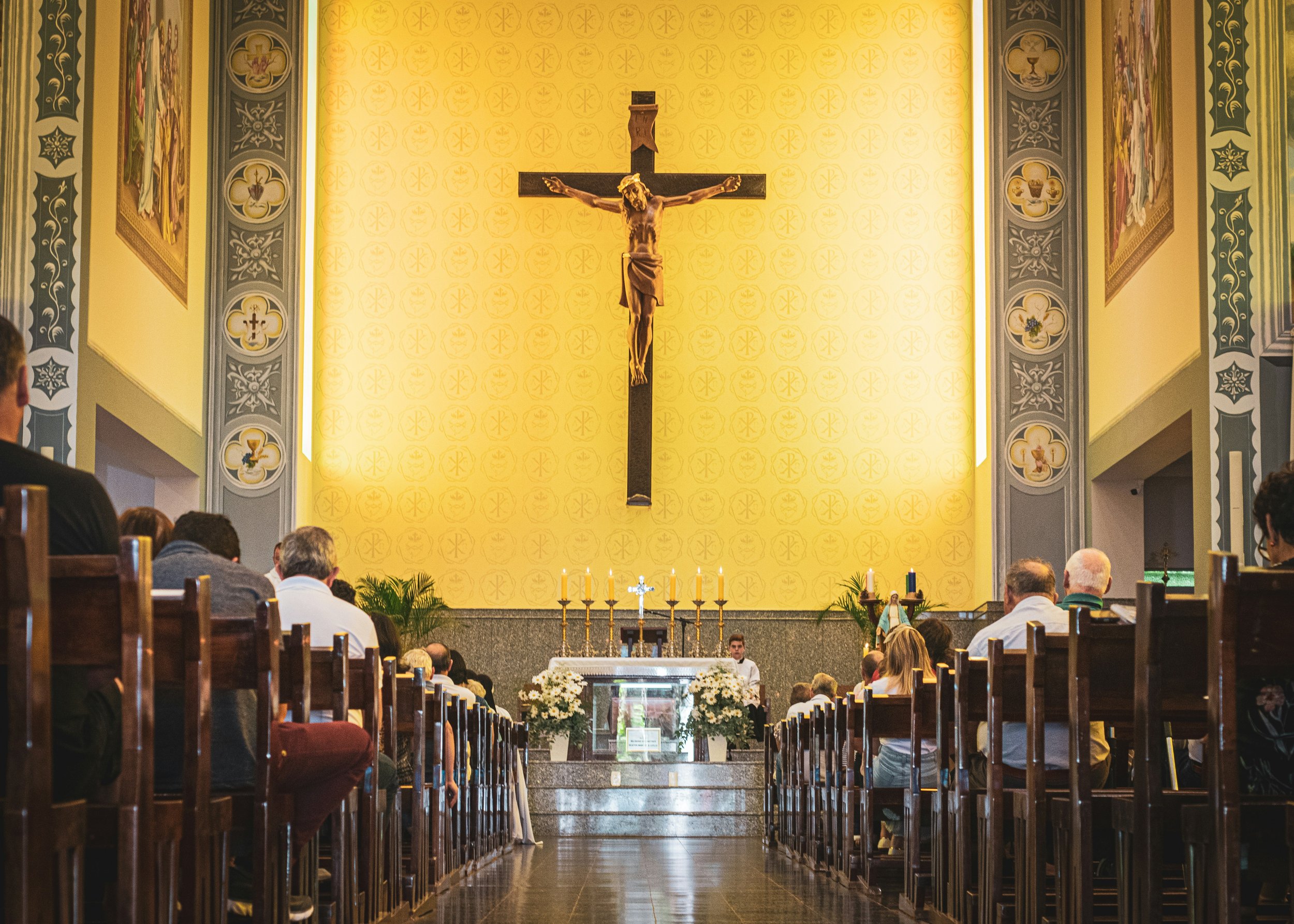
The words “religion” and “institution” have received a very negative connotation in recent years. And that is sort of unfortunate, because Christianity comes with religion, and every church is an institution. And so the negative connotations of “religion” and “institution” have been attributed to Christianity and church, themselves.
However, if people would think deeper about such issues, we might see that all the negative things people think and feel about Christianity and church are simply the result of human sin.
In any religious institution, our sin nature would have us gravitate toward salvation by works. The great tragedy is that evangelical Christianity is the only religion that expressly denies salvation by works, whereas every other religion embraces it.
That is why it is important (maybe critical) for evangelicals to continually bear witness to salvation by grace alone, through faith alone, in Christ alone. Because even evangelical communities—because of sin—will be tempted to stray into pharisaic waters.
However, that doesn’t mean that we must categorically reject all “religious traditions.” In fact, that would be impossible to do. It does mean that we just need to use our heads and hearts a little bit to understand the difference between the One who saves us and the religious traditions that we practice to help us draw closer to the One who saves us—because those religious traditions can help us draw closer to Him when applied thoughtfully.
And maybe some evangelicals would want to excommunicate me for saying so, but I actually wish that the religious traditions of evangelicals incorporated more of the ancient traditions (incense, stained glass, ash on the forehead during lent, etc.). Another tragic result of human sin is that we tend to throw out the baby with the bath water.
Father, You are perfect in all Your ways and all Your understanding. You knew from before creation about the constant struggles we face as human beings because of sin. Even when we are trying to do what is right, we stumble in our sin. Thank You for the cross. Where would we be without Your grace. Forgive us for our presumption and arrogance. Teach us how to be truly free in the grace You give in the faith You give. In Jesus’s name. Amen.